

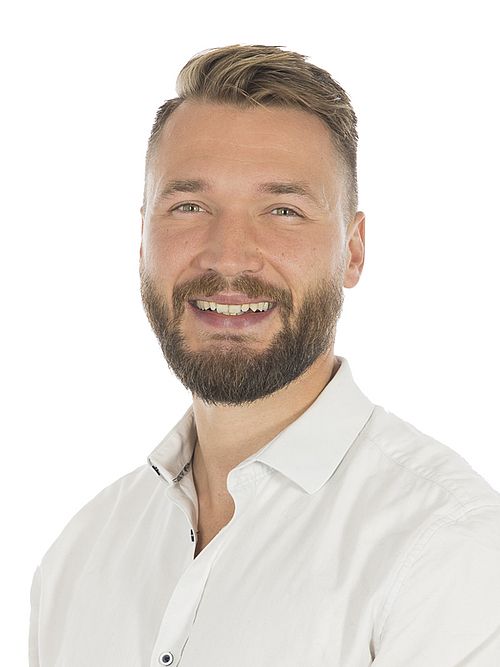
With a background in physical education and over a decade of teaching experience in higher education, Florian Knappe's work has consistently centered on designing and delivering sport and movement activities for diverse, mixed-ability groups. This experience has shaped a strong interest in how physical activity can be planned, adapted, and delivered in ways that are accessible and meaningful for different participants.
His engagement with sport in contexts of displacement began through volunteer work with NGOs across multiple sites in Greece. There, he developed and facilitated low-threshold leisure and activity programs in refugee camps and reception centers. These experiences raised questions that he later explored in greater depth through his master’s thesis and doctoral dissertation, particularly concerning the role and effects of sport and play in forced migration settings.
Since 2025, Florian has been working as a research fellow and senior lecturer in the Department of Sport, Exercise and Health. He is a member of the departmental assembly and the research committee. In the area of psychosocial health, his teaching focuses on physical activity, sleep, and stress management, as well as the educational psychology of physical education.
Alongside his academic role, he has led and contributed to several third-party funded applied research projects in Greece and Switzerland since 2017. These projects involve the design, implementation, monitoring, and evaluation of sport- and play-based interventions in refugee camps and federal asylum centers. His research has been published in peer-reviewed journals across sport science, public health, medicine, and migration studies, and he regularly presents at international applied and scientific conferences. Recent engagements include an invited lecture at the European Master Intensive Course in Sport Psychology and serving as guest editor for the journal Sports Psychiatry.
His research examines both the possibilities and the constraints of sport and play in forced migration contexts. He focuses on barriers to participation and the development of accessible interventions, particularly for groups facing substantial challenges in their everyday lives, such as unaccompanied minors, women, and older adults. A central concern is how sport- and play-based activities can be designed so that key process factors, such as perceived safety, inclusion, meaningful engagement, and experiences of success and joy, are consciously built into the intervention. Florian is especially interested in how these factors contribute to beneficial participation experiences, and how findings from controlled research settings can be translated into sustainable practice and scaled in resource-limited environments.